
Spring Commissioning Tips: Is Your Boat Ready for Spring?
It’s an early April weekend. The crocuses are sprouting, the sun warms your shoulders, and the air holds a hint of summer’s warmth. Confident that this boating season cannot possibly be as rainy as the last, you have made a trip to the marine supply store and pulled the deicer out of the water. Perhaps you’ve already contacted your trusted boat mechanic, and if you’re like me, you’ve run down an internet rabbit hole (again) looking for the best spring commissioning checklist. In short, it’s time for the spring launch. Hallelujah.
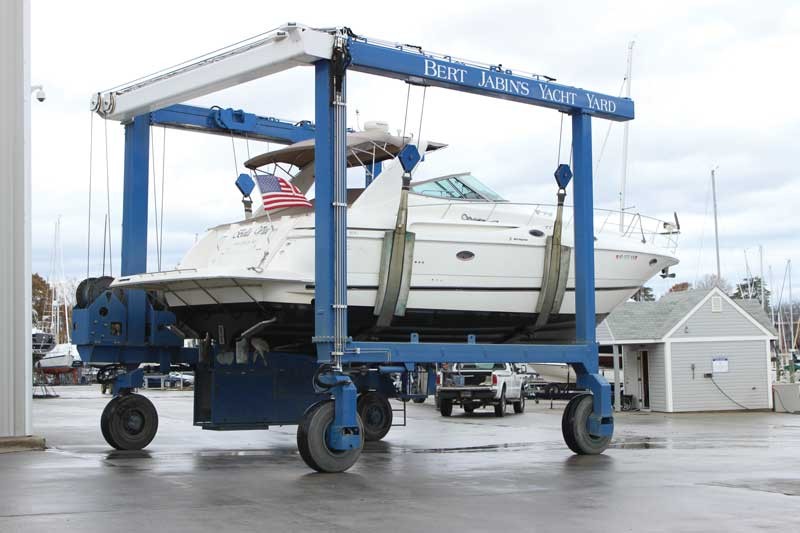
Getting any vessel ready to splash after months of sitting idle is no small task. But it’s joyful work, isn’t it? It means that we’re oh-so-close to those carefree days on the water that we’ve been dreaming about all winter. So, let’s get the job done and get out there.
Whether you’re a DIY gal, or a guy who has his boat mechanic on speed dial, you’ll find these pages filled with good, solid advice for getting started. We also suggest you consult the excellent BoatU.S. spring commissioning checklists, one or two internet forums, and the pros at your local boating store. Finally, don’t discount those pearls of wisdom that roll off the tongues of your friendly marina mates.
DIY or Hire a Pro?
If you haven’t determined whether to tackle the job on your own, ask yourself: Do I like mechanical tasks? Am I competent, or at least committed to getting up to speed? Am I willing to sit down and really read my systems’ manuals? Do I have an experienced boating friend who could lend a hand?
Boating friends who do most of their own maintenance will likely be happy to provide technical advice, and usually these highly valued friends can also point you to the best sources for products. Bay boat owner Mitchell Hill, who has done most of his own work on the multiple boats he’s owned, says, “When you’ve done the work yourself for a number of years, you learn the best sources for the products you’ll need. For example, for zincs, I wouldn’t go anywhere but zincs.com. They have every kind of zinc, and they ship everywhere.”
Hill also recommends getting a second set of eyes on your completed work. “It’s good to listen to the opinions of others,” he says. “On opening day each year, our boating club offers free U.S. Coast Guard Auxiliary vessel safety checks, and even though I’ve been working on boats for years, I always have mine inspected. Maybe there’s a new regulation or law that I might not be aware of. In my opinion, there’s always something new to learn.”
Whether you do the work yourself or hire a pro, don’t rush and don’t cut costs. Fixing a mistake can be more expensive than doing the job right the first time around. Service providers are already extremely busy, so if you decide to go with some professional help, contact your provider pronto to get in their queue.
Common DIY Mistakes
- Failure to check and monitor all the important fluids, such as oil and coolant.
- Failure to verify operation and condition of important systems, such as bilge pumps, battery charger, hoses below water line, and cooling systems.
- Starting the engine or HVAC, without realizing that most sea intake valves are closed if the boat is in the water, thereby not allowing any cooling raw water to flow the way it should.
- Failure to check and clean sea strainers; some boats do not have a strainer, and the boat owner doesn’t even realize he really needs one.
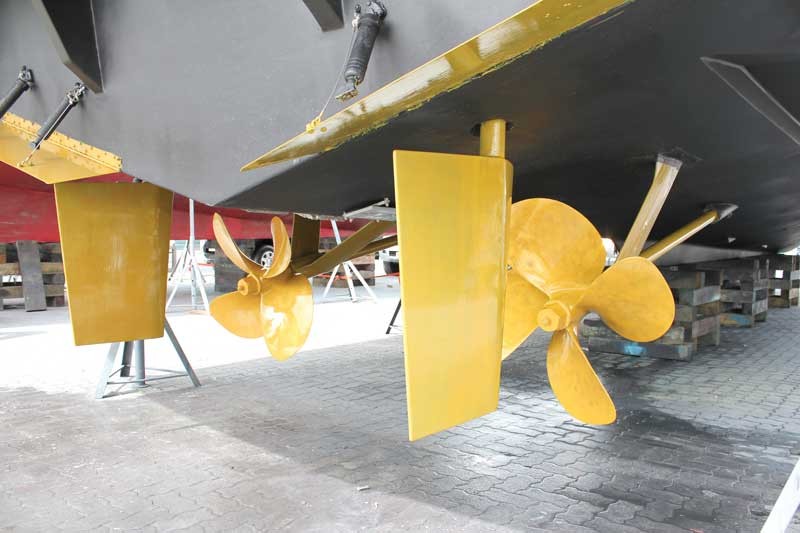
- Failure to check and replace anodes. Forgetting to install the plug before lowering the boat to the water!
How to select a pro for spring commissioning
Find a company with the skill set and experience to work on all of your boat’s systems. This will ensure all potential problems are found and issues can be addressed on the spot.
Look for good reviews and ask a dockmaster for recommendations. Dockmasters are notified every time any company does work within their marina, so they are often familiar with the companies’ reputations.
Keep shrink wrap out of the landfill
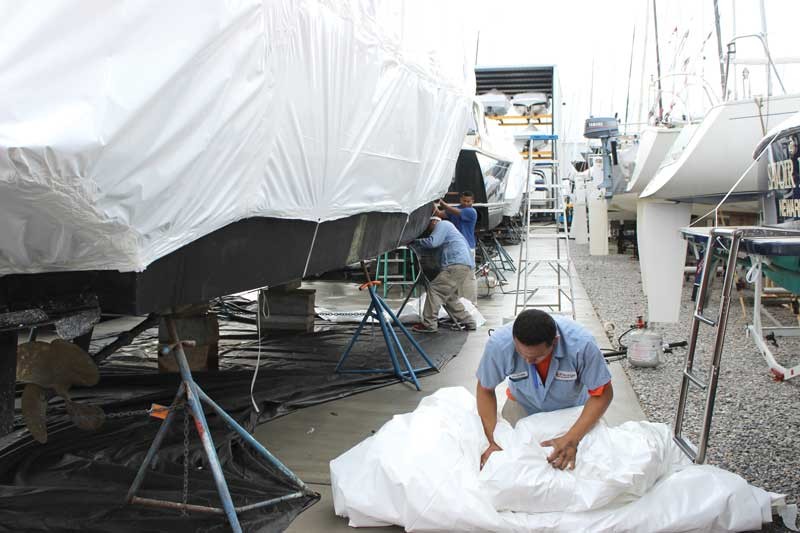
Most boaters want to do the right thing with old shrink wrap and get rid of it in an environmentally responsible way. But it’s hard, isn’t it? Who among us hasn’t balled up the big wad and stuck it in the trash, thinking all along that there has to be a better way? And even if you find a place that will recycle your huge hunk of plastic, they’ll insist that all zippers, doors, snaps, and straps be removed. But join Team PropTalk in fighting the good fight on this one. If you’re at a certified clean marina, chances are good that the staff will help make sure your wrap gets disposed of properly.
Find more information about the shrink wrap recycling program offered by the Marine Trades Association of Maryland, in partnership with the Maryland Clean Marina program and Chesapeake Materials.
Seven Steps for a Successful Splash
- Before the splash, or during a short-haul if you winter in the water, check: leaks, water inside, hoses and clamps, security of ports/hatches, batteries connected, tight stuffing box, seacocks, zincs, hull and bottom paint, and drain plug if appropriate.
- Batteries and Engine: Change oil filter; check oil and transmission fluid levels and repair any leaks; visual inspection of belts, terminals, wiring; change fuel filter and inspect fuel tank and lines to include pumps and hoses, and joints. Do batteries hold a charge?
- Safety Equipment: Run down the required equipment list, which includes a fire extinguisher, distress signals, and first aid equipment. Registration sticker up to date? Find detailed lists at: dnr.maryland.gov and dgif.virginia.gov/boating.
- Navigation: Onboard and working: compass, navigation lights, marine radio, and chartplotter.
- Hull and Prop: Check condition of each. Is a new coat of paint or a foul-release agent needed?
- Trailer: Before you use it, inspect the hitch, safety chains, tires, bearings, lights, tie down straps, and brakes.
- Shakedown Cruise: Run the engine, listen for unusual sounds, work off any moisture; bring a boating friend, so you can move around the vessel and check things.
Article courtesy of PropTalk Magazine

2026 Annapolis Spring Sailboat Show
Join S&J Yachts in Annapolis, MD During the Show: S&J Brokerage Booth – B 21-22 S&J Yachts brings decades of experience to the 2026 Annapolis Spring Sailboat Show — particularly with Island Packet Yachts, admired worldwide for their craftsmanship and bluewater performance. Our brokers know these vessels inside and out, offering insight that only hands-on…

2026 Bay Bridge Boat Show
Join S&J Yachts in Grasonville, MD During the Show: S&J Brokerage Booth – B 11-12 Our full-time brokers have years of experience and share the company’s commitment to excellence. Specializing in quality yachts both in the U.S. and Worldwide, our brokers are there with you through the process whether you are buying or selling. If…
"*" indicates required fields